SwRI Develops Hydrogen Engine for Medium-Duty Vehicles
SwRI develops a hydrogen internal combustion engine for medium-duty vehicles with diesel-like torque and near-zero tailpipe CO2 emissions.
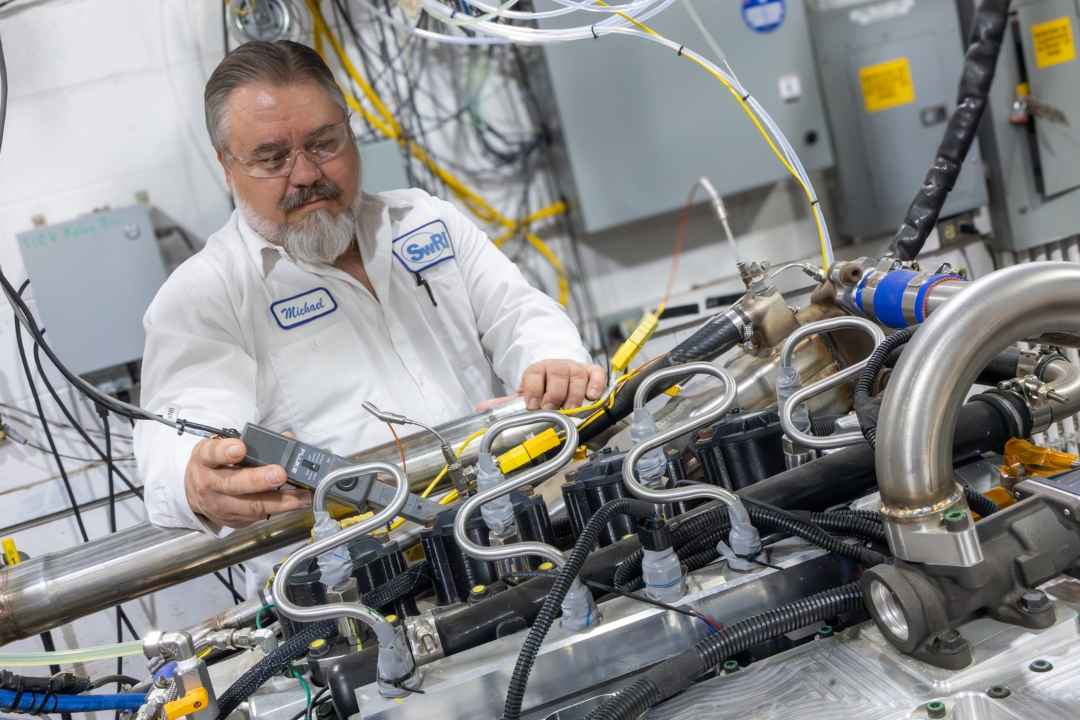
Southwest Research Institute (SwRI) has completed development of a spark-ignited hydrogen internal combustion engine designed for medium-duty commercial vehicles. The multiyear project produced an H2-fueled engine with diesel-like torque characteristics and performance while producing near-zero tailpipe CO2 emissions, according to SwRI.
The engine was developed over two years in collaboration with a commercial client and selected Tier 1 suppliers. The development program included both single-cylinder and multi-cylinder engine work, with the completed engine designed for installation in a commercial medium-duty truck chassis.
“In addition to decades developing medium- and heavy-duty engines, SwRI has some of the most extensive experience in the world developing and testing H2-ICEs for internal research, clients, and industry demonstrations,” said Dr. Qilong Lu, a program manager in SwRI’s powertrain systems engineering department and one of the leads on this project. “The engine was designed, constructed, and rigorously tested at SwRI to ensure efficiency and performance.”
The engine is based on a pent-roof-style design previously developed for gasoline combustion but modified for hydrogen fuel. SwRI said the engine can provide enough torque and power to compete with diesel-fueled engines in a medium-duty truck application.
Development initially focused on optimizing combustion and fuel injection at the single-cylinder level before moving to the multi-cylinder engine. Engineers addressed challenges including pre-ignition, combustion stability, and overall systems integration.
“We began at the single-cylinder level, focusing on optimizing combustion and injection strategies,” Lu said. “From there, our team ramped up efforts to develop the full multi-cylinder engine, addressing key challenges such as pre-ignition, combustion stability, and overall systems integration.”
The engine uses modified port geometry to improve airflow and accommodate hydrogen’s faster combustion speeds. A larger intake valve is used to improve volumetric efficiency, while hydrogen-specific fuel injectors support combustion.
A turbocharger is incorporated to provide diesel-like torque performance. The engine also uses an engine control system designed and calibrated by SwRI.
The medium-duty engine builds on previous SwRI hydrogen internal combustion engine projects. Those efforts include the development of a Class 8 heavy-duty hydrogen-powered demonstration vehicle and the conversion of a natural gas-fueled engine to H2-ICE technology with minimal hardware modifications.
More recently, SwRI engineers upgraded an H2-ICE with a turbocharger to improve performance, with the goal of competing with current long-haul diesel engines while focusing on fuel economy and maintaining near-zero tailpipe emissions.
“The project brought together many areas and experts at the Institute to complete,” said Chris Bitsis, assistant director of SwRI’s powertrain systems engineering department, who oversees combustion research programs. “SwRI’s hydrogen combustion engine program is working every day to advance this technology and showcase its potential as a near-zero carbon emissions industry solution.”
SwRI has a multidisciplinary team working on hydrogen energy research and decarbonization technologies for multiple industries.
Aug 05, 2026