The Part Number Problem with CAT Common Rail Injectors
(Sponsored Content) — A CAT engine model can narrow down an injector order, but it rarely completes it. Across its off-highway range, Caterpillar has used several fuel injection technologies and multiple injector references within certain engine families. For a repair shop, a listing that says “fits CAT C6.6” is not enough to release a purchase order. The exact application and part reference still have to agree.
Common rail equipment makes the distinction particularly important. Versions of the CAT C4.4, C6.6, C7.1 and C9.3 ACERT use high-pressure common rail injection, while other Caterpillar engines use different systems. A workshop looking for a common rail injector needs to separate those applications from HEUI and other unit-injector systems before comparing replacement options.
The engine family is a clue, not a part number
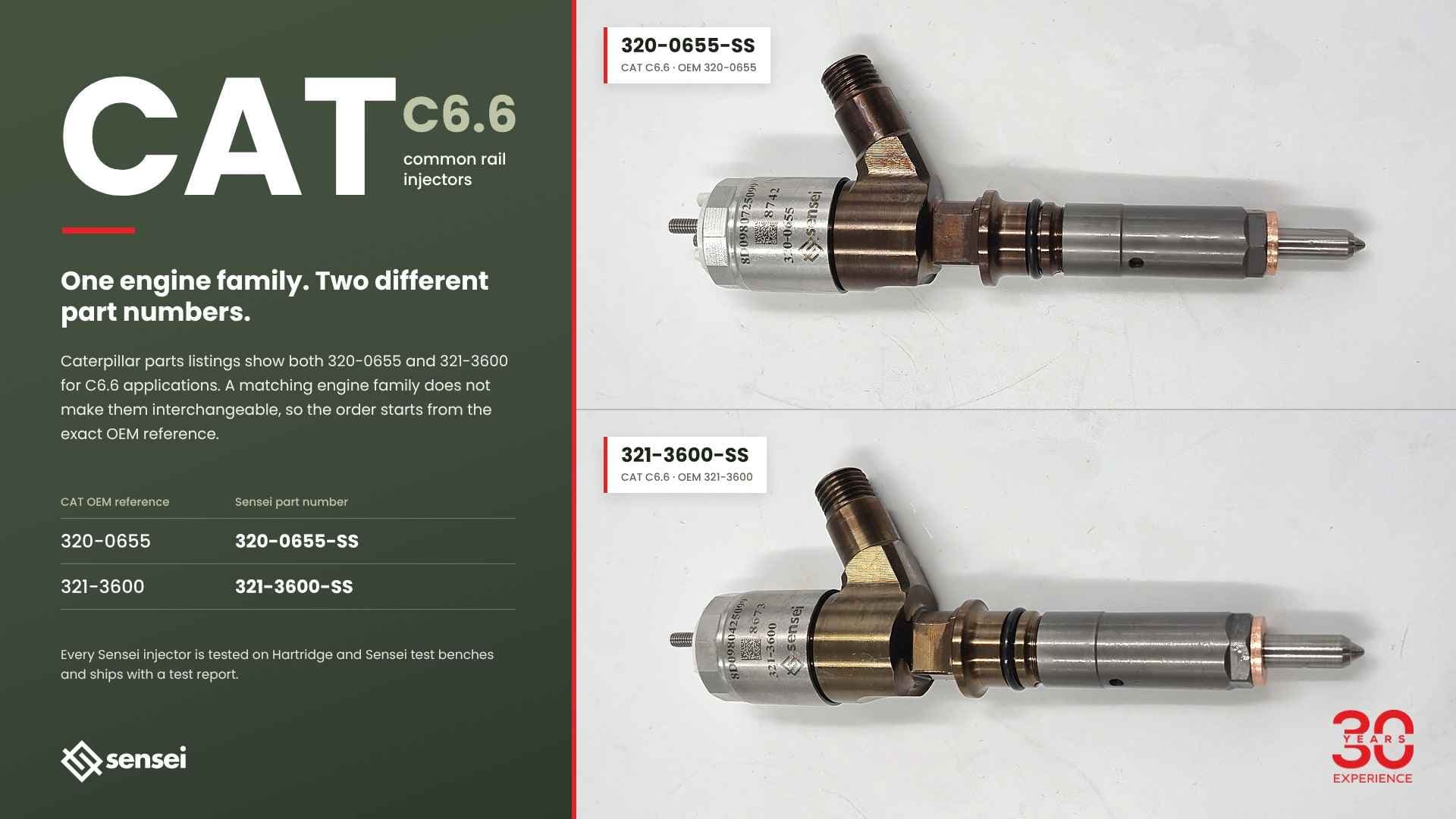
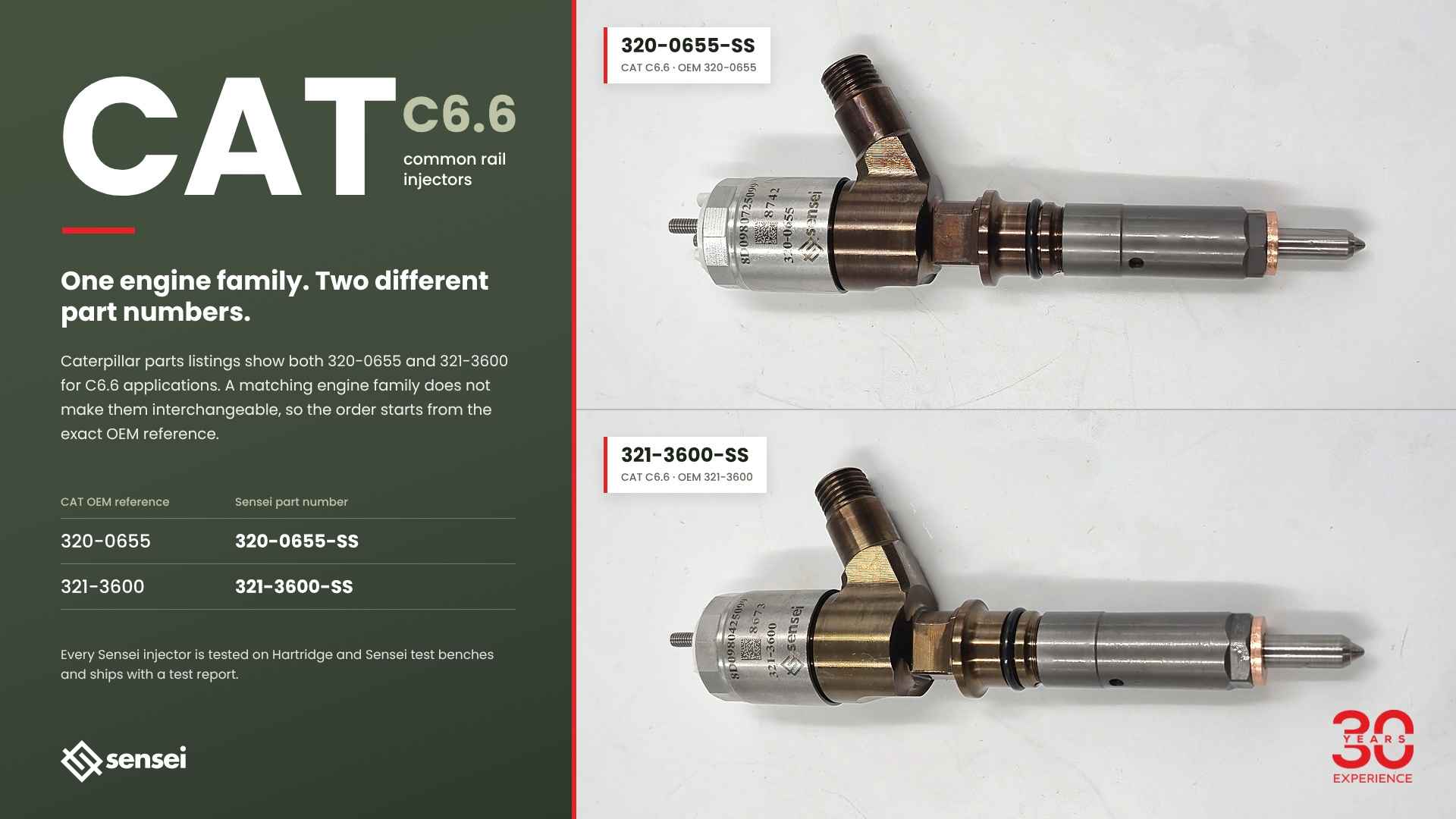
A C6.6 engine designation is useful information, but it does not identify every injector used across the engine family. Caterpillar’s own parts listings include references such as 320-0655 and 321-3600 for C6.6 applications. Both are associated with common rail systems, yet they should not be treated as interchangeable merely because the engine family is the same. Their individual application and replacement references still have to be checked. This is why listings for Caterpillar common rail injectors need to be checked against the exact OEM reference rather than the engine badge alone.
An OEM part number is usually the clearest starting point for a replacement order. It identifies a defined component and provides a reference for checking revised numbers and compatible aftermarket options. A product described only by engine family leaves important details unconfirmed.
If the part number is missing or unreadable, engine identification and existing service documentation can help narrow the possibilities. Photographs may help clarify a reference, but two injectors that look alike may still have different internal specifications or calibration requirements. Visual similarity is not proof of compatibility.
An injector that fits may still be wrong
A common rail injector must meter fuel precisely as engine load changes. The nozzle and control components are specified for a particular application. Choosing an injector with the wrong specification can create problems even if its external dimensions appear correct.
A replacement may bolt in and still be unsuitable for the fuel system. The manufacturer’s service instructions also matter wherever calibration codes or electronic setup are required. Checking the reference before purchase is a considerably easier task than resolving a compatibility problem after installation.
The buying decision should also distinguish an original Cat part, a Cat Reman part and an independent aftermarket product. These are different supply categories. A compatible aftermarket injector should be evaluated against the correct OEM reference and its stated specification, not represented as an original Caterpillar-manufactured component.
Aftermarket options need the same reference checks
A second supply channel is useful only when the parts match is clear. Contractors comparing price, lead time and availability need the verified OEM reference first, followed by a check of the aftermarket product’s stated compatibility. A cheaper invoice is no saving if it results in another shipment and more machine downtime.
Independent diesel injection specialist Sensei Common Rail offers CAT-compatible aftermarket injector products alongside a wider range of common rail injectors and related components. Its catalogue includes CAT-referenced items such as 320-0655, 321-3600 and 396-9626, allowing buyers to begin with a known OEM number rather than a broad machine description. Compatibility should be confirmed for the actual engine application before ordering.
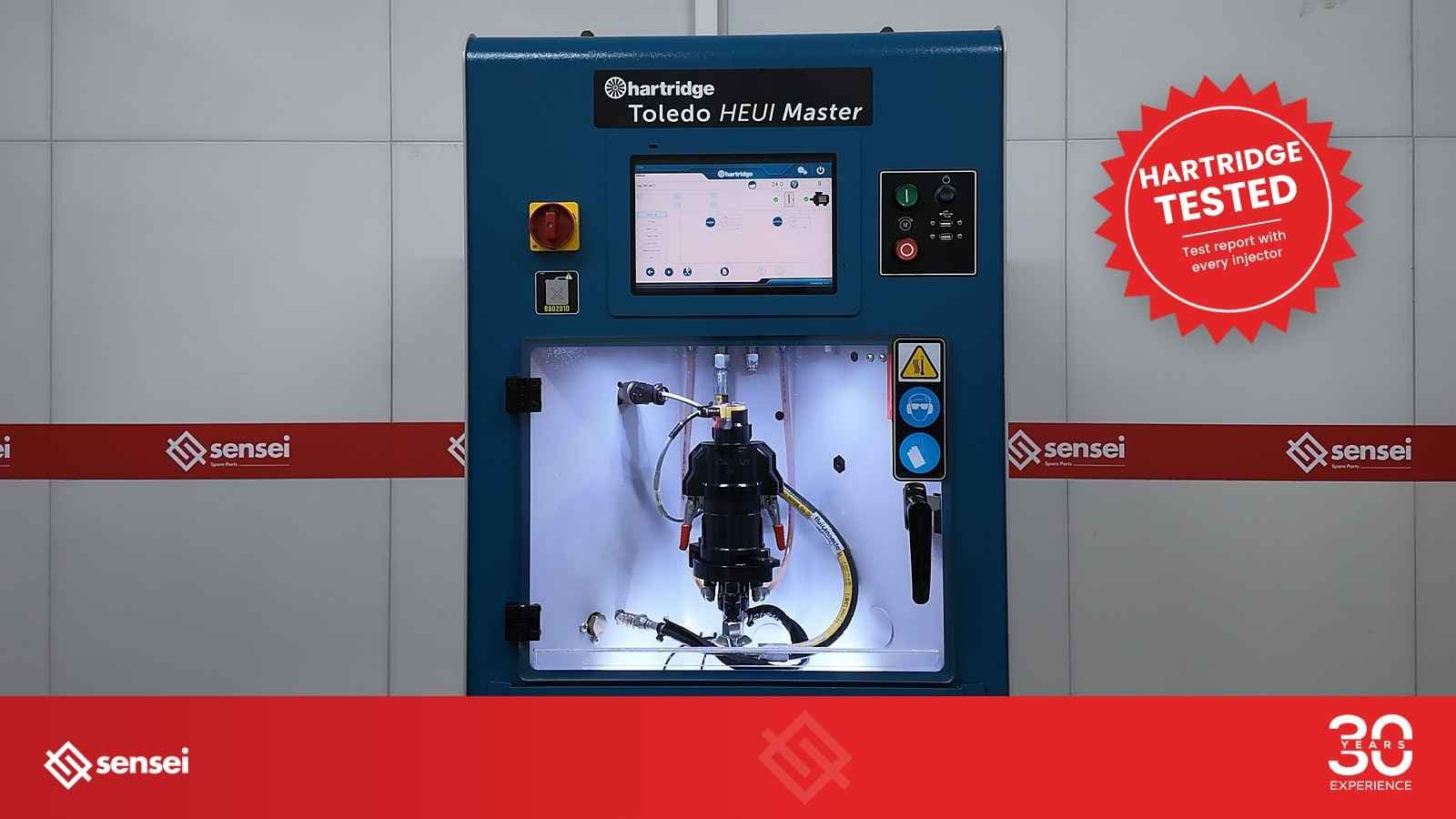
Sensei also puts its testing facilities in view. Alongside its own engineering infrastructure, the company has published a seven-step injector testing demonstration using Hartridge equipment, a respected name in diesel injection testing. For workshops evaluating an aftermarket supplier, a defined testing process carries more weight than a general claim about quality.
A correct OEM reference remains the starting point. What happens to the injector before it reaches the customer matters too. Contractors buying for a machine that needs to return to work should expect a clear parts match and a supplier prepared to explain how its products are tested.