Influential and Sustainable
AI data centers are redefining what “good” looks like in construction
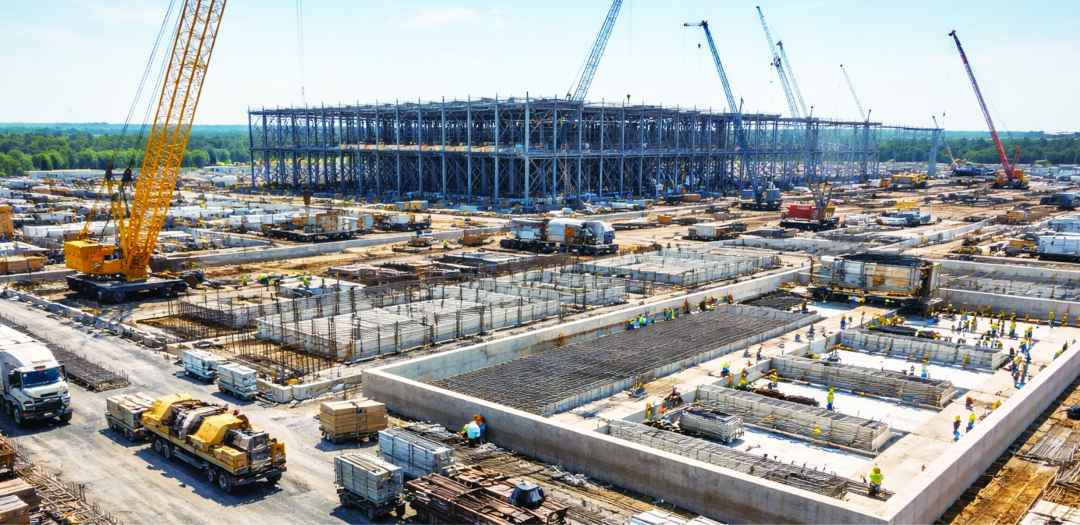
AI-driven data center construction has become one of the most influential forces in the U.S. building market. These projects are large, fast-moving and technically demanding — but their real impact goes beyond scale. They are resetting expectations for how projects are planned, executed and measured, particularly when it comes to sustainability, waste and operational discipline.
For general contractors, data centers are no longer just another vertical. They are becoming the proving ground where new standards are established, standards that are increasingly shaping owner expectations across industrial, manufacturing and infrastructure projects.
Sustainability Is Moving From the Back End to the Jobsite
For years, sustainability in construction often lived in reports and post-project summaries. AI data centers are pushing it directly into day-to-day operations.
Hyperscale technology companies face intense pressure from investors, communities and customers to address not only operational energy use, but embodied carbon, construction waste and local impact. That scrutiny is flowing down the supply chain to general contractors.
Owners now want to understand:
- How materials move through the site
- What waste streams look like in real time
- How construction activity affects traffic, noise and neighboring communities
This has direct implications for how General Contractors (GCs) plan logistics, coordinate trades and manage sites. Sustainability is no longer an abstract goal — it is embedded in execution.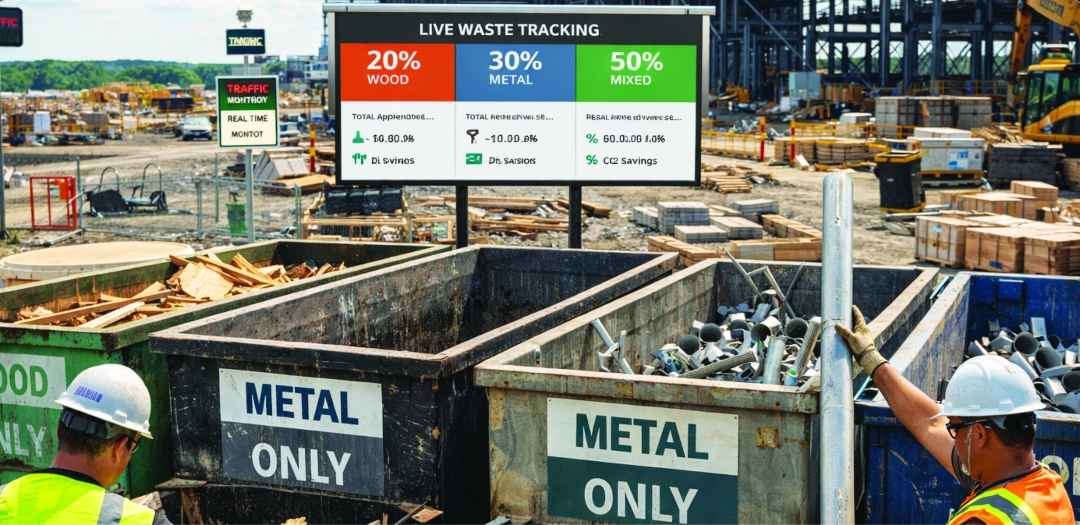
Waste Is Becoming a Measurable Cost Center
One of the most significant changes underway is the ability to measure waste accurately while a project is still active.
AI-enabled visibility tools — such as image recognition, smart containers and automated reporting — are giving project teams a clear picture of what materials are being discarded, where contamination occurs and how diversion actually performs.
For general contractors, this changes the economics of waste management. Instead of treating hauling and disposal as fixed costs, teams can now identify:
- Where re-handling is driving unnecessary expense
- Which trades or phases generate the most waste
- How site layout and sequencing affect material recovery
On large data center sites with compressed schedules, even small inefficiencies multiply quickly. Better visibility allows GCs to intervene earlier, rather than reconciling overruns after the fact.
Sustainability Is Becoming a Competitive Advantage
As waste and material data becomes more transparent, sustainability is shifting from a compliance exercise to a source of differentiation.
Data center developers are learning that cleaner sites are not just better for reporting — they are easier to manage. Reduced clutter improves safety. Fewer haul-offs reduce congestion. Clear material flows support faster work.
General contractors that can demonstrate these outcomes are gaining an edge in competitive bids. Owners increasingly favor teams that can show:
- Cost savings tied to waste reduction
- Schedule reliability supported by cleaner logistics
- Fewer community complaints and site disruptions
In this environment, sustainability performance is directly linked to profitability and repeat business.
New Metrics Are Replacing Old Benchmarks
Diversion percentages alone are no longer sufficient for owners building billion-dollar AI infrastructure.
New metrics are emerging that provide a more complete picture of project impact, including:
- Net CO₂ avoided through material recovery
- Material-specific tracking rather than blended totals
- Verified end-use outcomes, such as energy generation or reuse
These metrics reward precision and discipline. Mixing materials, over-ordering or poor coordination between trades now shows up clearly in the data.
For general contractors, this creates both risk and opportunity. Teams that rely on outdated assumptions may struggle to meet owner expectations. Those that align field operations with these new metrics are better positioned to lead conversations rather than react to them.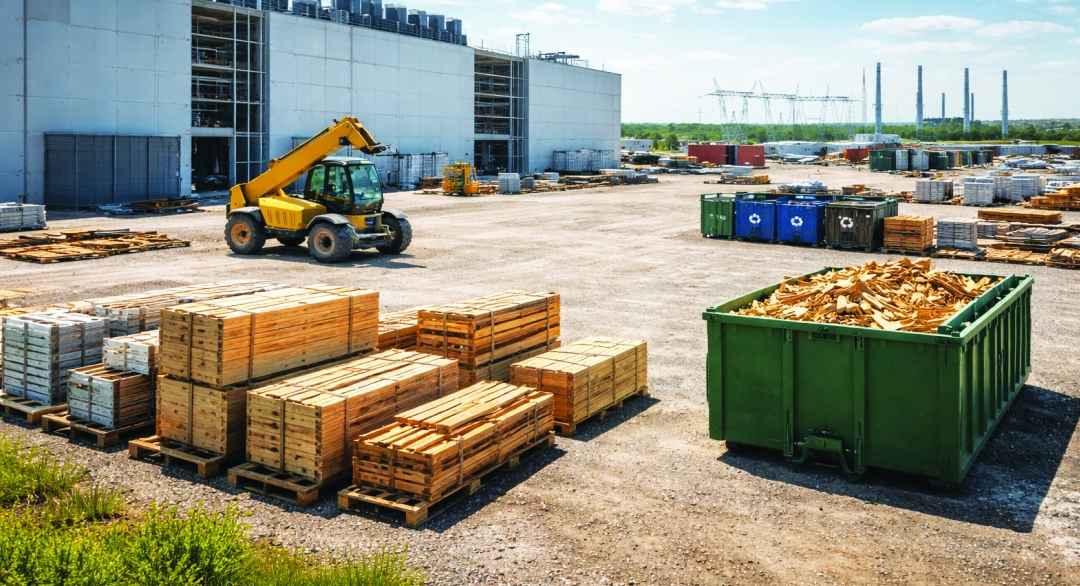
Zero Wood Waste Is a Signal, Not an Exception
One of the clearest indicators of where the industry is headed is the emergence of public commitments to zero wood waste on major projects.
Wood is one of the most common construction waste streams, particularly on data center sites with heavy packaging and temporary materials. Historically, it has also been one of the least optimized.
A zero wood waste commitment signals that owners and contractors believe waste can be managed with the same rigor as schedule and safety. It reflects confidence in visibility, accountability and execution at scale.
For GCs, these commitments raise expectations across the jobsite. They require coordination between procurement, logistics, field teams and waste partners. They also suggest that similar commitments may soon apply to other material streams.
Private-Sector Leadership Is Setting the Pace
Notably, many of these changes are being driven by private-sector leadership rather than regulation.
Hyperscale technology companies operate globally and build for decades-long lifecycles. Their standards are shaped by investor expectations, corporate goals and community relationships — not election cycles.
As a result, general contractors are seeing consistent expectations regardless of jurisdiction. Data centers in different states may face different permitting processes, but owner-defined performance benchmarks are increasingly uniform.
This consistency benefits contractors who adapt early. Those that can meet these standards once can apply them across multiple projects, reducing friction and improving margins over time.
What This Means for General Contractors
For construction leaders, the implications are immediate:
- Sustainability data will be expected during construction, not after.
- Waste and material efficiency now affect project economics.
- Operational discipline is becoming visible to owners and communities.
- Technology adoption is shaping competitive positioning.
AI data center construction is accelerating trends that were already underway. What makes this moment different is speed and scale. The standards being set today are likely to influence how other industrial projects are built tomorrow.
General contractors who treat these changes as strategic — not burdensome — are finding that cleaner sites, better data and stronger coordination lead to better outcomes across the board. In that sense, AI data centers are not just redefining sustainability in construction — they are redefining what operational excellence looks like in the field.
Todd Thomas is the CEO of Woodchuck, a climate technology company turning construction wood waste into renewable energy using AI.